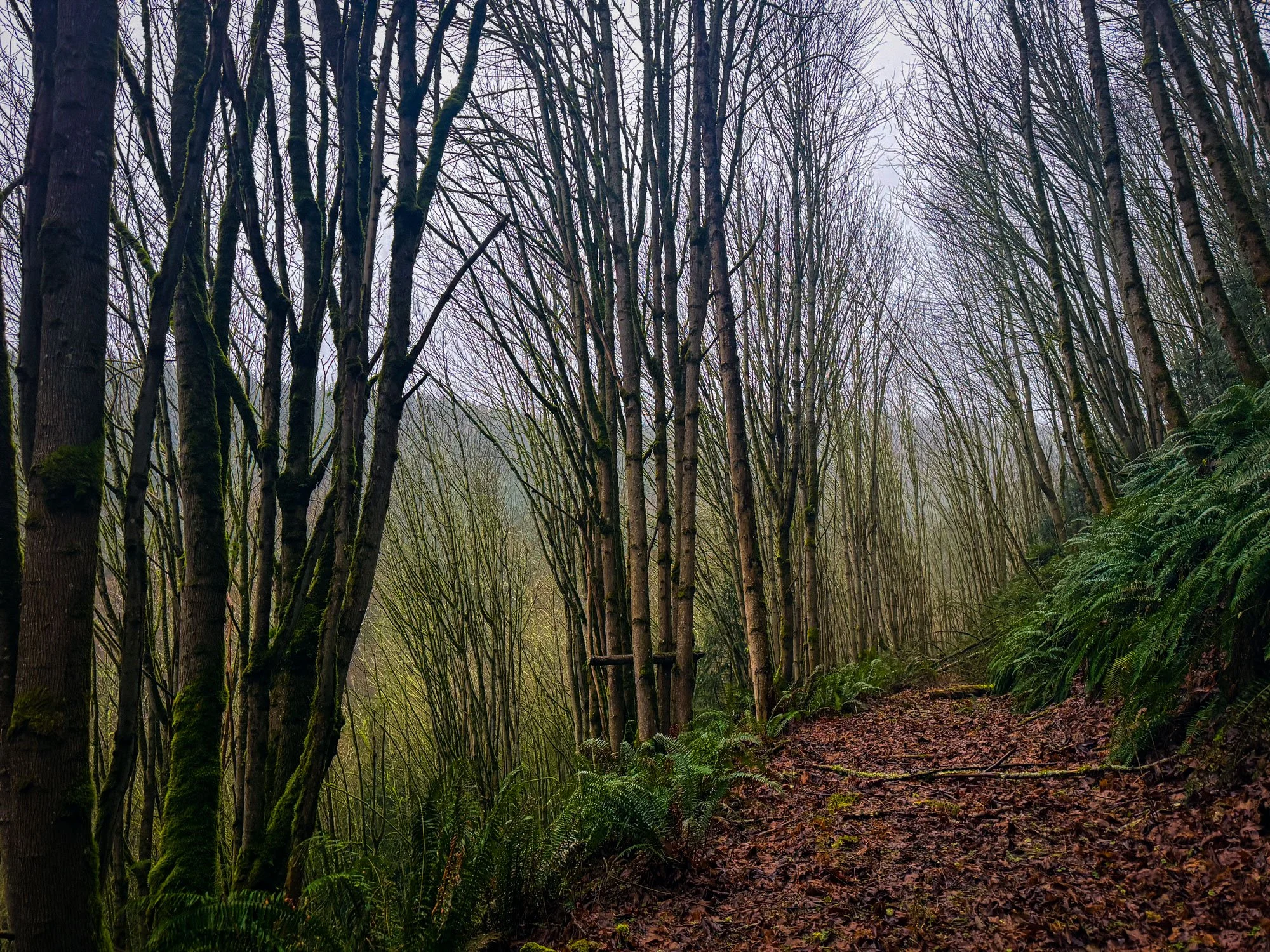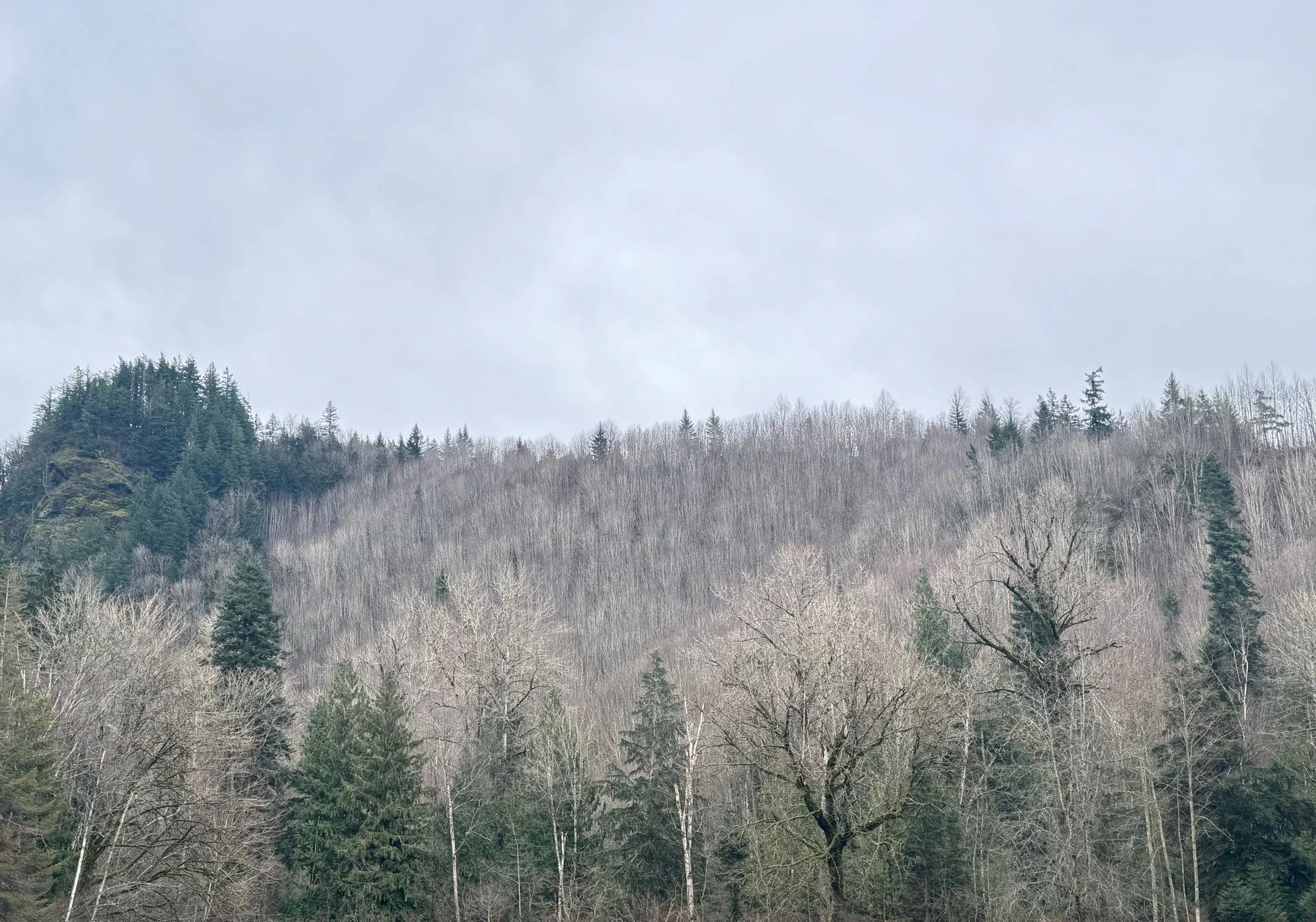
WE WERE Born in the World's Only Temperate Rainforest

Before Seattle's skyline, before the highways and towns, the Pacific Northwest was blanketed in an ancient temperate rainforest—one of the planet's rarest ecosystems. Massive Douglas Firs, Western Red Cedars, and yes, Bigleaf Maples created a canopy so dense that sunlight barely touched the forest floor.
This wasn't just any forest. Fed by Pacific storms and tempered by marine air, these trees grew into giants. The Bigleaf Maple—Acer macrophyllum—evolved here over millennia, developing the largest leaves of any maple on Earth to capture what little sunlight filtered through the canopy.
The Rush That Changed Everything
In less than a century, we lost 90% of it. The old-growth forests that stood for thousands of years were cleared to build Seattle, Portland, and dozens of growing cities. The lumber that framed America's westward expansion came from these ancient groves. What remains today are fragments—protected pockets that hint at what once was.
The Lost Forest That Built a Region

THE BIGLEAF MAPLE BELT
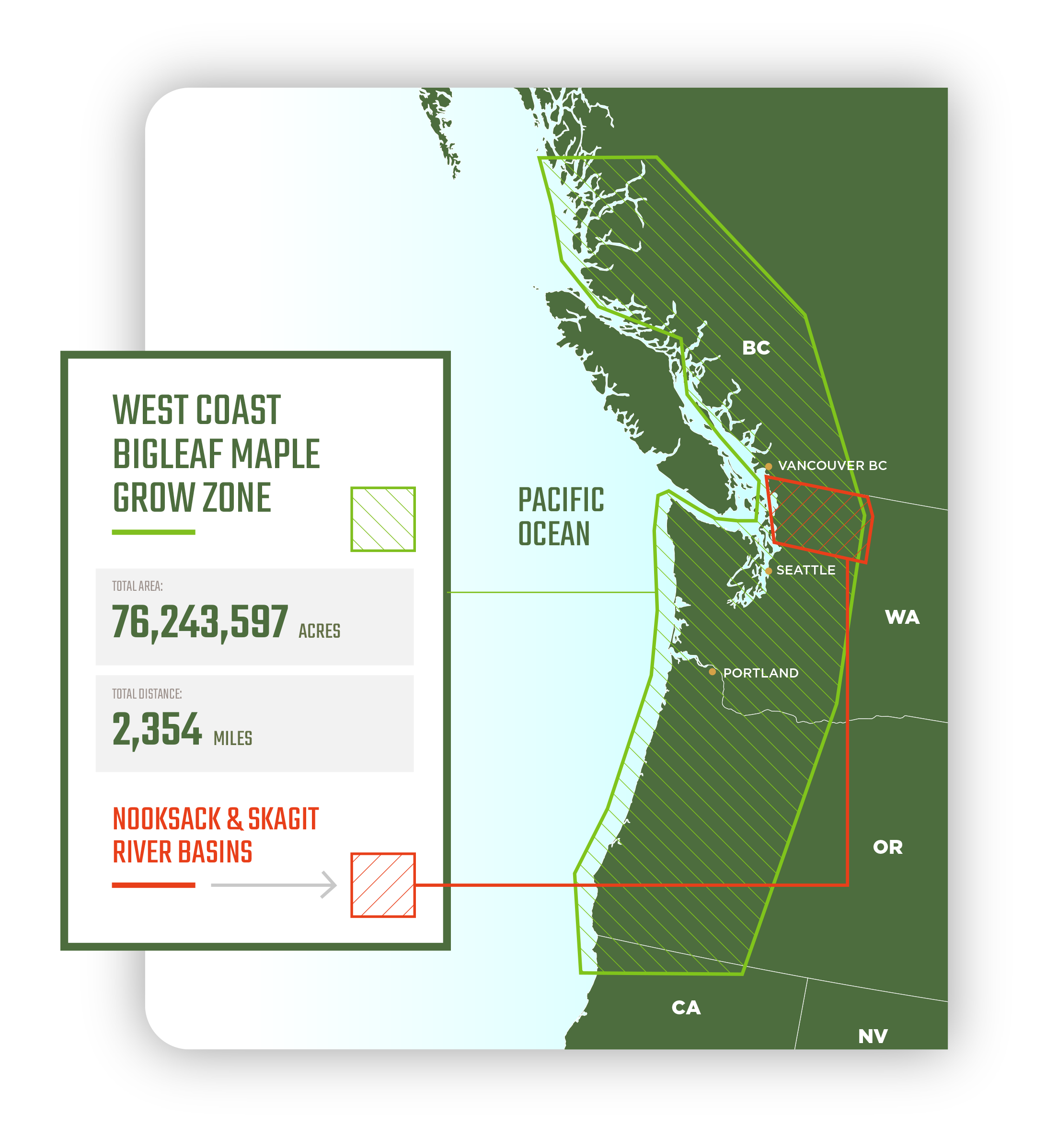
This map tells the story of North America's most distinctive maple. Stretching 2,354 miles along the Pacific Coast, the Bigleaf Maple thrives in a narrow corridor where ocean meets mountain—76 million acres of potential that have remained largely untapped.
Notice the highlighted region: the Nooksack and Skagit River Basins. This is our home territory in Whatcom County, where Pacific storms deliver consistent moisture, volcanic soils provide rich minerals, and the temperate climate creates ideal conditions for maple production. While Bigleaf Maples grow from British Columbia to California, this specific microclimate produces the most consistent, highest-quality sap flows.
We're the first to commercially tap this vast resource. From this small corner of a massive range, we're proving what West Coast maple can become—one tree, one grove, one bottle at a time.

WHY OUR BIGLEAF MAPLES ARE DIFFERENT
But the Bigleaf Maple adapted. Unlike the sugar maples of the East that need freezing winters and hot summers, our maples evolved for the Pacific Northwest's unique climate:
Mild winters that rarely freeze, creating a longer, gentler sap flow
Ocean-moderated temperatures that produce more complex sugars
Volcanic soils from the Cascade Range that infuse unique minerals
Year-round moisture from Pacific storms and summer fog
This climate creates sap with half the sugar content of Eastern maples—which means we boil 80 gallons of sap to make just one gallon of syrup. But what emerges is liquid gold: bold, complex, with notes of vanilla and butterscotch found nowhere else on Earth.
"Now it makes sense why a walk in the forest feels so good."
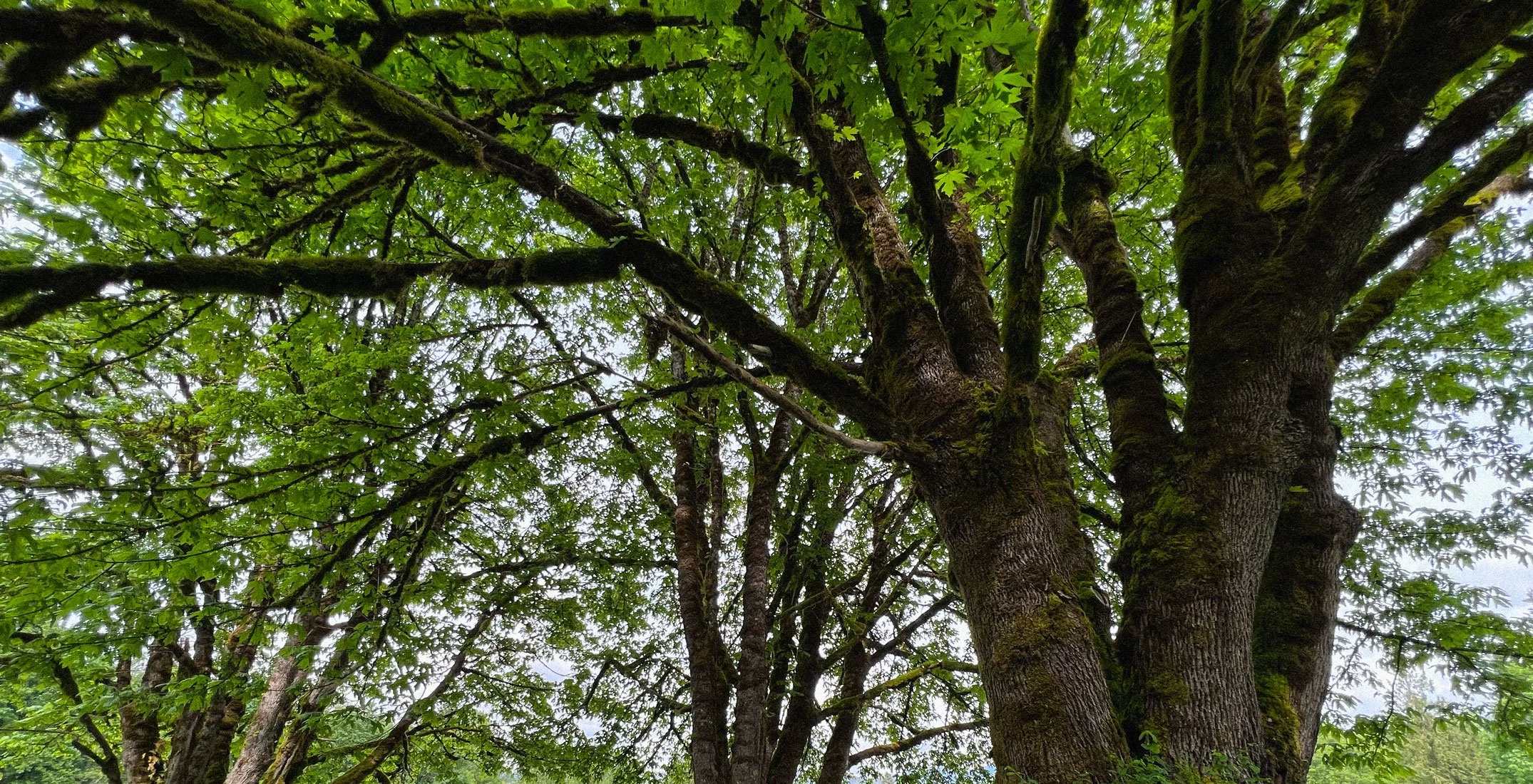
Recent research from University College London has revealed that plants are powerful reflectors of near-infrared light—the wavelength that enhances mitochondrial function, metabolism, and cellular health in humans. Bigleaf maple (Acer macrophyllum) stands as the undisputed king of this beneficial light, producing leaves up to 12 inches across—the largest of any maple species.
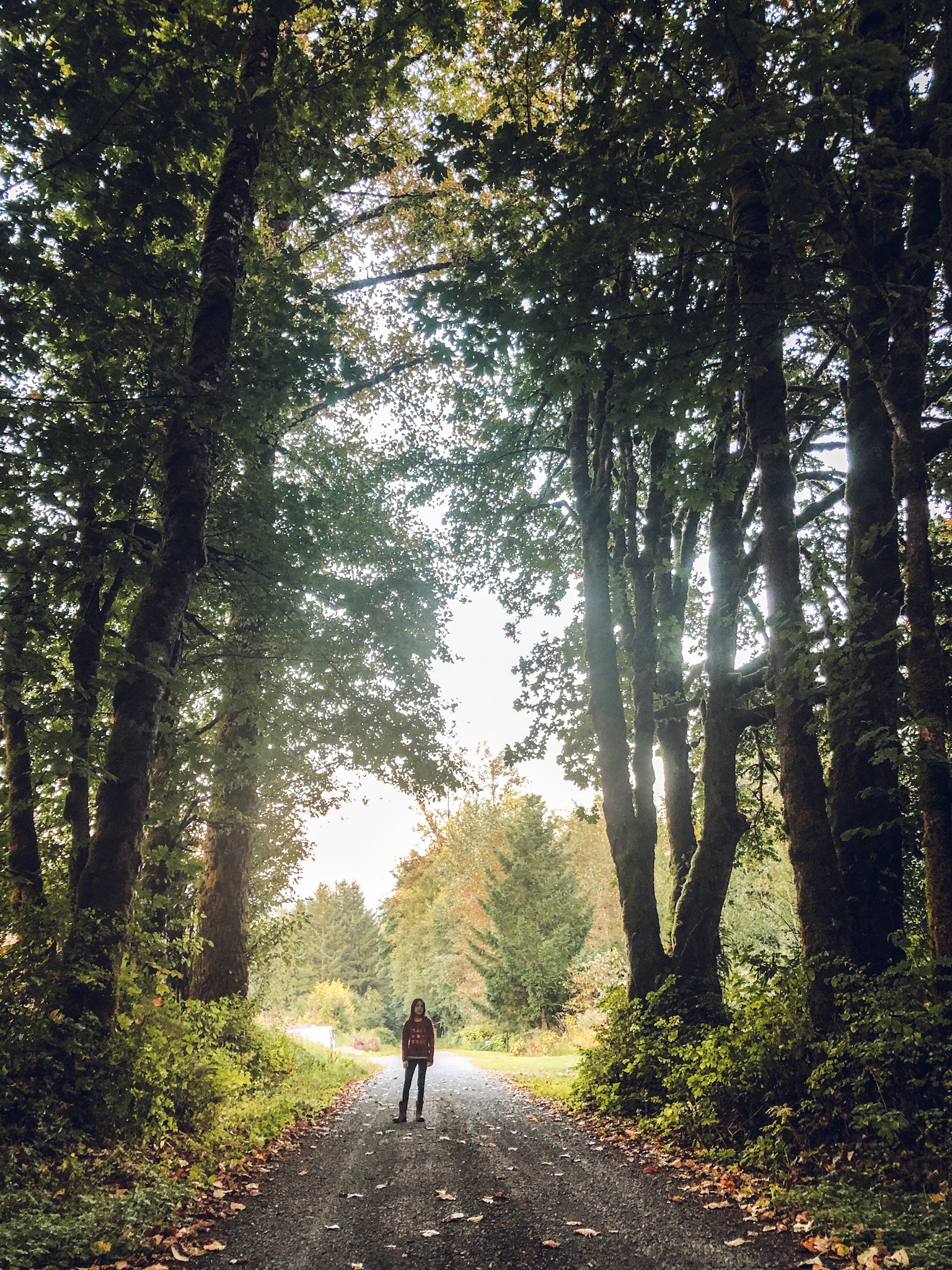
Combined with what we’ve proven is “the densest canopy undercarriage of any rainforest species,” each bigleaf maple forest becomes a cathedral of reflected infrared light. Where a single leaf approaches therapeutic dosing, a mature bigleaf canopy creates an infrared-rich microclimate beneath it—magnifying the health benefits that researchers have linked to reduced inflammation, improved vision, and enhanced energy production. Studies show that cities with increased tree coverage see measurable improvements in residents’ health markers; bigleaf maple’s exceptional leaf surface area and multi-stem coppice structure means our forests don’t just restore ecosystems—they restore the light spectrum humans evolved under, returning both the ecological and physiological “lungs” of the Pacific Northwest.
The NEAR-Infrared King